The digital asset market in Indonesia keeps booming. According to the latest data from the Financial Services Authority (OJK) as of March 2026, the number of crypto investors in the country has passed 21.37 million. Unfortunately, this massive growth is often accompanied by confusing information.
So that you don't get caught up in baseless euphoria or fear (Fear, Uncertainty, and Doubt), let's unpack the most popular crypto myths versus facts in Indonesia today.
Myth: Crypto Is a Legal Means of Payment in Indonesia
Fact: As of now, the only legal means of payment in Indonesia is the Rupiah.
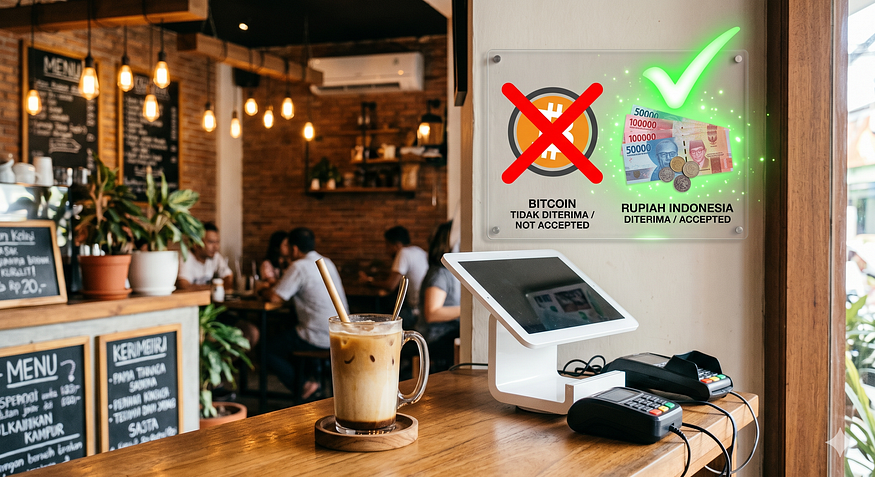
Even if you hold a large amount of Bitcoin or Ethereum, you may not use it directly to buy coffee or pay a toll road fee. In Indonesia, crypto is categorized as a commodity or investment asset that can be traded on crypto exchanges, not as a currency.
Myth: Crypto Investment Has No Legal Status in Indonesia
Fact: The crypto industry in Indonesia is already highly regulated.
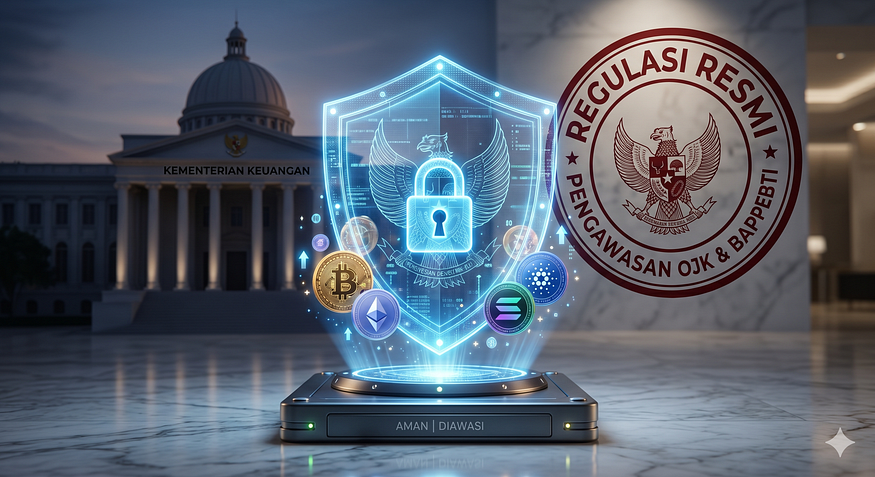
Since early 2026, the transition period for supervising crypto assets from Bappebti to OJK has officially ended. Indonesia also has the Nusantara Commodity Exchange (CFX) as its national crypto exchange, which oversees transaction security and consumer protection.
Tip: Make sure you only transact with crypto asset merchants officially registered with OJK/Bappebti.
Myth: Crypto Is Tax-Free Because It Is Decentralized
Fact: Every crypto transaction in Indonesia is subject to tax.
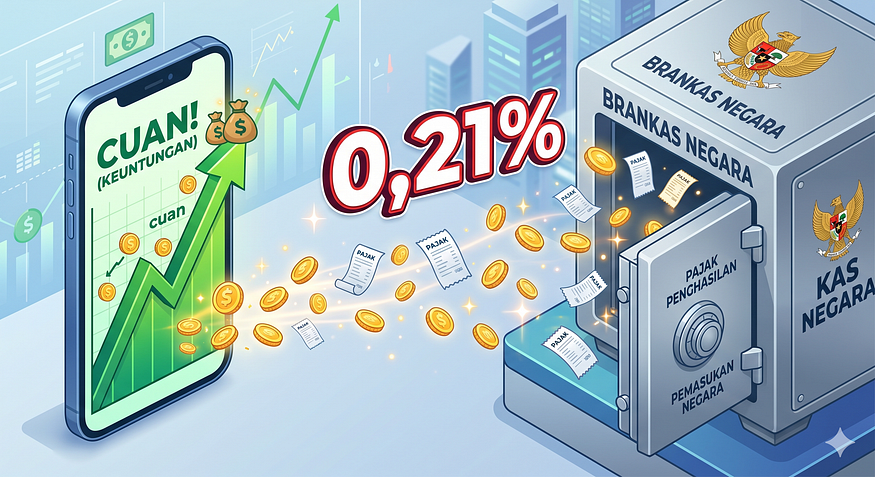
Under the latest rules (an evolution of PMK 68/2022), crypto buying and selling transactions are subject to Income Tax (PPh). Starting in 2026, the PPh rate has been adjusted to around 0.21% for transactions with official merchants, while the VAT (PPN) component on the asset itself has begun to be synchronized to encourage wider adoption. This tax is usually deducted directly by your exchange platform.
Myth: Crypto Will Definitely Make You Rich Quick (or Is Definitely a Scam)
Fact: Crypto is a high-risk asset (High Risk, High Return).

The "get rich quick" narrative is a dangerous marketing strategy. In fact, crypto prices are highly volatile. The liquidation cascade in February 2026 proved that even large institutions can be affected by volatility. However, calling it "definitely a scam" is also wrong, because the blockchain technology behind it has been used in practice for data transparency and financial efficiency.
Myth: Only Foreign Coins Are Good
Fact: Local crypto projects are growing.

Bappebti has designated hundreds of crypto assets as eligible for trading, including several tokens built by Indonesians that meet strict requirements on liquidity and system security. Investors are now more selective and disciplined, choosing projects on fundamentals rather than mere trends.
Conclusion: Literacy Is Key
As the market enters its "maturing" phase in 2026, Indonesian investors are expected to be more critical. Don't swallow myths that promise instant profit with no risk. Always do your own research (Do Your Own Research) and use legal platforms.
References & Accurate Sources:
OJK: Crypto Investor Growth Report, March 2026
IKPI: Update on Indonesia's Crypto Tax Rates 2026
Bappebti/Kominfo: The National Crypto Exchange Ecosystem